 By Admin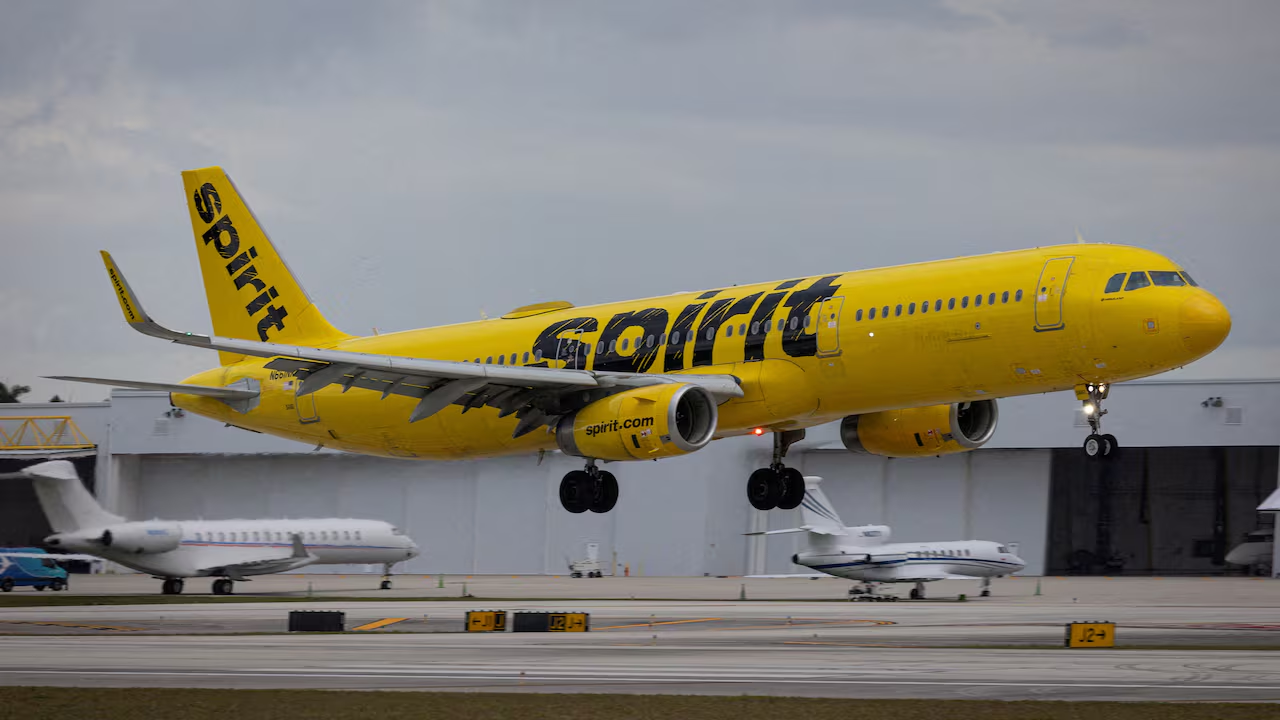
Spirit Airlines has ceased operations, marking the first major U.S. airline collapse tied directly to the economic fallout from the Iran war. The ultra‑low‑cost carrier, known for its bare‑bones, no‑frills flights and rock‑bottom fares, filed for an orderly wind‑down on Saturday after failing to secure creditor backing for a proposed U.S. government bailout. The shutdown has grounded thousands of flights, stranded passengers, wiped out jobs, and highlighted how a sudden spike in jet fuel prices can bring even a once‑resilient discount airline to its knees.
For years, Spirit’s business model was built on the assumption that cheap fuel and high‑density, low‑cost travel would keep travelers choosing its stripped‑down cabins over the added comforts of major airlines. Now, with jet fuel roughly doubling in price since the start of the Iran‑related conflict, that model has become financially unsustainable without a major rescue nobody was willing to provide.
Why Spirit Could Not Survive the Fuel Shock
Energy markets in the Strait of Hormuz, a critical chokepoint for global oil shipments, went into turmoil after U.S.‑led strikes on Iranian infrastructure disrupted traffic and sent crude prices soaring. That volatility translated directly into jet fuel costs, which climbed to about $4.51 a gallon by the end of April—far above the roughly $2.24 per gallon Spirit had assumed in its 2026 restructuring plan.
The airline had already been struggling to turn a profit even before the fuel‑price shock. After the pandemic, many travelers shifted away from Spirit‑style ultra‑low‑cost travel toward options that offered more comfort, reliability, and flexibility. As passengers increasingly prioritized experience over the absolute lowest fare, Spirit’s core customer base began to shrink. The carrier’s 3.9% share of the U.S. domestic market in February, down from 5.1% the year before, shows how thin its position had become.
When the restructuring plan that would have allowed Spirit to emerge from its second bankruptcy ran into the new reality of $4.51‑per‑gallon fuel, the math stopped working. Without fresh financing, the board had no realistic path forward and voted to shut down operations rather than limp along in a death spiral.
What Happened to Spirit’s Bailout Proposal?
The Trump administration had tried to intervene. President Donald Trump backed a proposal to pump $500 million into Spirit in exchange for warrants equivalent to about 90% of the airline’s equity, essentially giving the government a controlling stake if the deal went through. The idea was to keep the discount carrier afloat, preserve thousands of jobs, and maintain competitive pressure on major airlines like Spirit Airlines, which have long relied on Spirit’s ultra‑low fares to keep their own prices in check.
Inside the White House, though, the plan was contentious. Some of Trump’s closest advisers and many Republicans in Congress opposed the bailout, arguing that the airline market should be left to operate without government ownership. Sources close to the matter said the administration ultimately walked away from the deal after Spirit’s creditors refused to endorse the terms.
Transportation Secretary Sean Duffy later told reporters there had been little appetite from other airlines to buy Spirit Airlines either. “What would someone buy?” he asked. “If no one else wants to buy them, why would we buy them?” The message was clear: without private‑sector interest and political consensus, the government was unwilling to step in as a last‑resort owner.
Passengers Left in the Air
The immediate impact of Spirit’s shutdown has fallen hardest on its customers. On the day it ceased operations, Spirit had more than 4,000 domestic flights scheduled over the next two weeks, carrying nearly 810,000 seats. With the airline grounding its entire fleet, those trips were canceled, and passengers were told not to go to the airport.
Major U.S. carriers quickly rolled out “rescue‑fare” offers to try to absorb the overflow. Frontier, another ultra‑low‑cost carrier, announced systemwide discounts and plans to add summer routes. JetBlue offered $99 fares through the weekend, Southwest introduced special low‑priced tickets, United capped the price on certain one‑way routes, and American listed emergency rescue fares while evaluating whether to add extra capacity on key routes previously dominated by Spirit.
For travelers who had already paid for Spirit‑only tickets, the sudden shutdown meant scrambling for alternatives, refund claims, and the frustrating reality that budget‑only travel is only as reliable as the single carrier sustaining it.

Ripple Effects Across the U.S. Airline Industry
Spirit Airlines collapse is a stark reminder that not all airlines feel shocks equally. The ultra‑low‑cost niche, with its thin profit margins and reliance on minimal staffing and high‑density flying, has always been the first to feel the pinch when fuel prices spike, regulations tighten, or demand shifts. Now that Spirit has disappeared, rivals like JetBlue, Frontier, and the major carriers are left to suck up the remaining discount‑travel demand—but they, too, are reeling from the same fuel‑price surge.
The shutdown will almost certainly put upward pressure on fares, especially in markets where Spirit had a large presence. The airline’s 5% share of U.S. flights at its peak made it a powerful check on the big players, and its removal from the system could give them a bit more breathing room to raise prices without fear of being undercut by a bare‑bones competitor.
The Big Picture: When War Meets the Skies
The story of Spirit Airlines closure is not just a story about an individual airline; it is a story about how geopolitical conflict ripples through everyday life. In this case, the Iran‑related war‑driven spike in fuel prices exposed the fragility of an airline built on razor‑thin margins and a tightly calculated cost structure. The government’s partial attempt to rescue Spirit, and the internal debate over whether it was worth it, underscores how hard it is to balance economic support, political risk, and the simple fact that some businesses may be too far gone to save.
As passengers regroup, workers search for new jobs, and competitors scramble to fill the gap, Spirit’s shutdown stands as a turning point in the post‑pandemic, post‑war‑shock airline landscape. It is a reminder that even the airline that prided itself on the lowest fares in the sky is not immune to the winds of global politics—and that sometimes, the cheapest ticket is also the most vulnerable.
News which you won’t want to miss
- B&M and Home Bargains Chocolate Recall: Urgent Allergy Warning Over Missing Ingredient Labels
- Council Tax Reforms 2027: New Rules Give Vulnerable Households More Time and Protection
- Jimmy Kimmel vs Trump: Controversy Over Joke Sparks Debate on Free Speech and Responsibility
- Allbirds AI Pivot Explained: Why the Struggling Sneaker Brand Is Betting Big on Artificial Intelligence
- EasyJet Refund Controversy: Family’s £4,000 Dispute Sparks Debate Over Airline Compassion Policies