 By Admin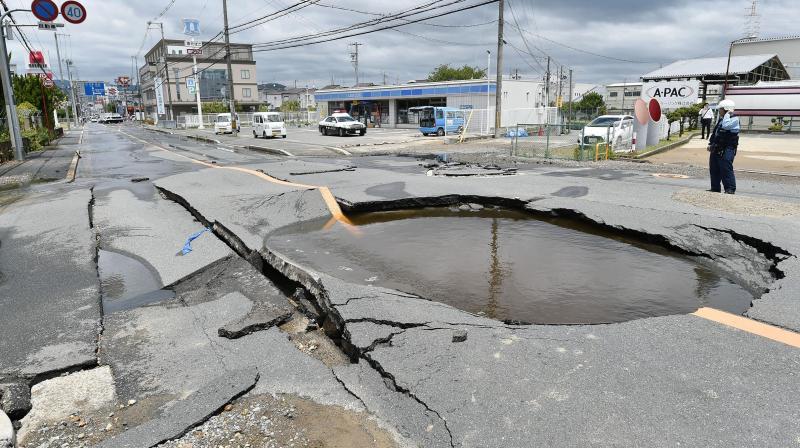
Powerful Earthquake Strikes Northern Japan, Tsunami Warning Issued
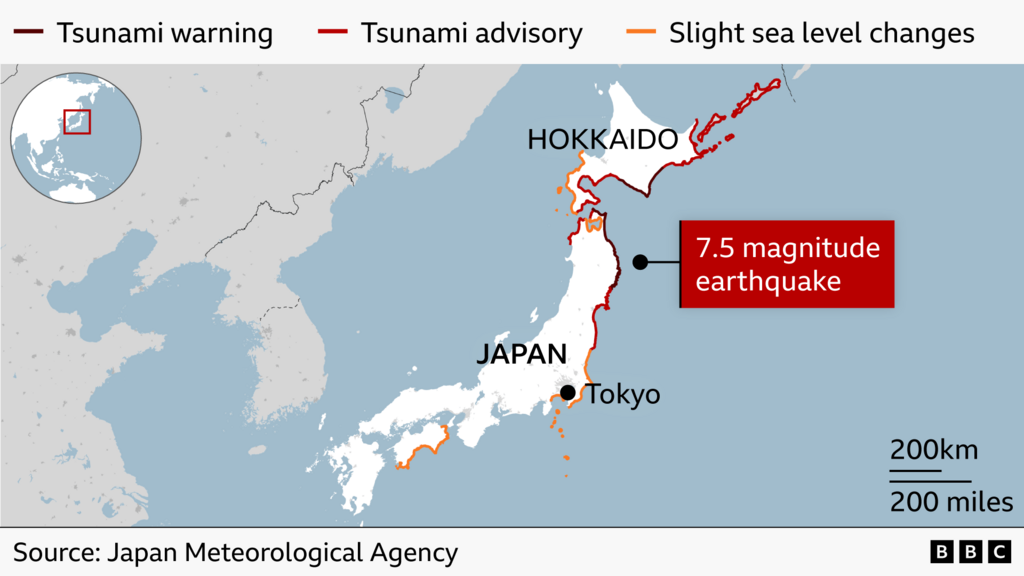
A powerful 7.5 magnitude earthquake struck off the northern coast of Japan on Monday, triggering urgent tsunami warnings and prompting authorities to call for immediate evacuations in coastal regions.
The quake hit at approximately 4:53 pm local time in waters near Iwate Prefecture, according to the Japan Meteorological Agency. Tremors were felt across a wide area, including parts of Tokyo, located hundreds of kilometers away.
Tsunami Warning Issued as Authorities Urge Immediate Evacuation
Following the earthquake, the Japan Meteorological Agency issued a tsunami warning for waves that could reach up to 3 meters along parts of the northern coastline.
Officials warned that the first waves could arrive quickly and continue repeatedly, increasing the danger for coastal communities.
Residents in affected areas have been strongly advised to move to higher ground or designated evacuation shelters without delay. Authorities emphasized that people should remain in safe locations until the warning is officially lifted.
Government Activates Emergency Response
Prime Minister Sanae Takaichi confirmed that a crisis management team has been established to assess the situation and coordinate emergency response efforts.
Government agencies are currently working to determine the extent of damage and whether there have been any casualties. Early reports suggest no immediate large-scale destruction, though assessments are ongoing.
Live broadcasts from national media showed several ports in Iwate appearing intact shortly after the quake, but officials cautioned that conditions could change rapidly.
Why Japan Faces Frequent Earthquakes
Japan is one of the most seismically active countries in the world, largely due to its position along the Pacific Ring of Fire. This region is known for intense geological activity, where multiple tectonic plates meet and shift.
The country experiences around 1,500 earthquakes each year, accounting for nearly 18 percent of global seismic activity.
One area of particular concern is the Nankai Trough, an 800-kilometer fault line where the Philippine Sea Plate is pushing beneath the continental plate. Scientists have warned that this region could generate a major earthquake in the future.
Ongoing Concerns Over Future Megaquakes
In recent years, the Japan Meteorological Agency has issued rare advisories warning of potential “megaquakes” following significant offshore tremors.
Such warnings highlight the long-term risk facing the region, as even a single large earthquake can have widespread consequences, including tsunamis and infrastructure damage.
While Japan’s advanced early warning systems and strict building codes have helped reduce casualties in many cases, events like this serve as a reminder of the constant threat posed by natural forces.
What Happens Next
Emergency teams continue to monitor coastal areas for tsunami activity while assessing structural damage across affected regions.
Residents are urged to stay informed through official updates and follow evacuation instructions strictly. Transportation services and local infrastructure may face disruptions as authorities prioritize safety.
The coming hours will be critical in determining the full impact of the earthquake and whether further aftershocks or waves will pose additional risks.
News which you won’t want to miss
- American YouTuber Jailed in South Korea: Johnny Somali Sentenced Over Controversial Actions
- Allbirds AI Pivot Explained: Why the Struggling Sneaker Brand Is Betting Big on Artificial Intelligence
- Ice Spice McDonald’s Altercation: Rapper Breaks Silence After Alleged Attack in Los Angeles