 By Admin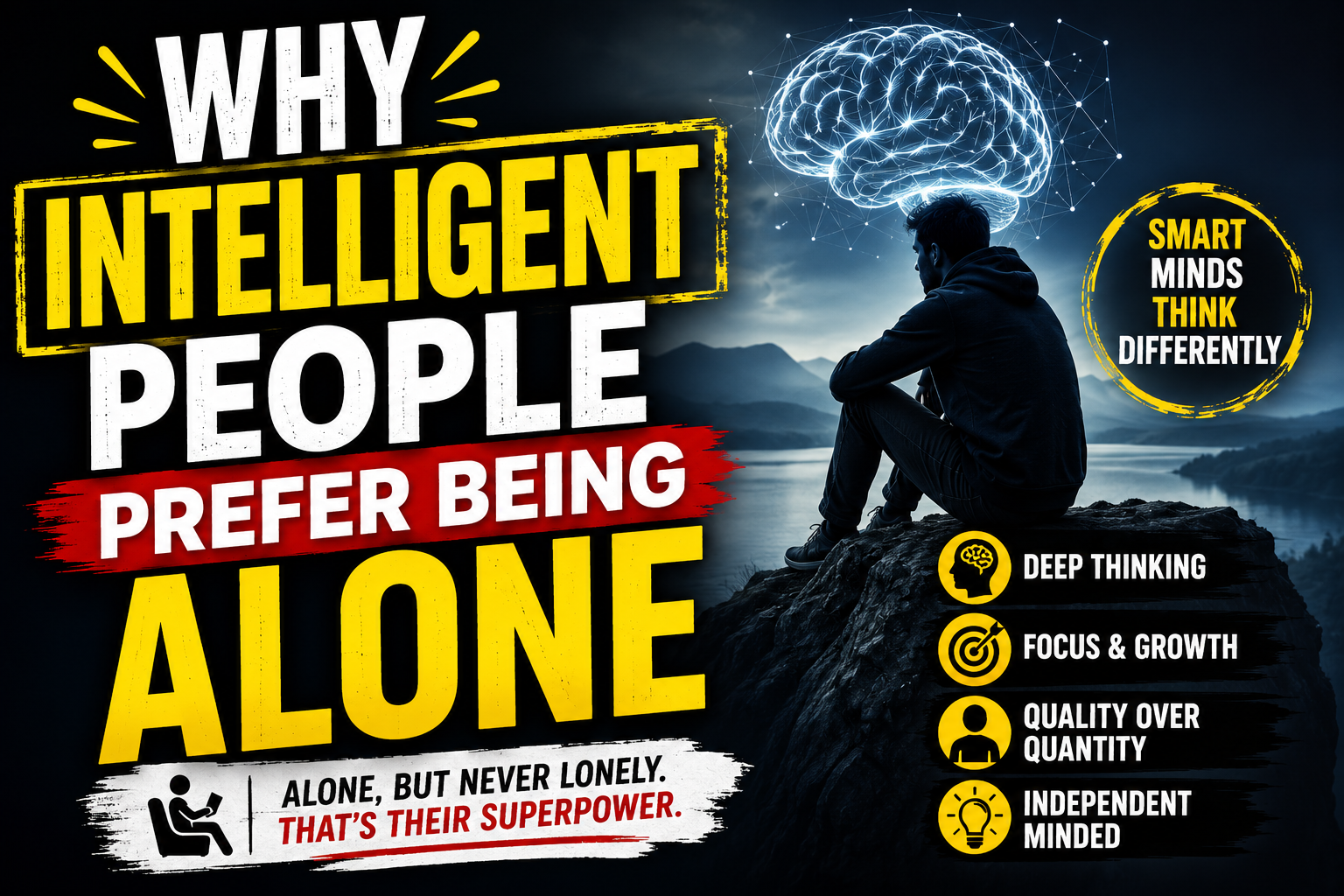
In a world that celebrates constant social interaction, being alone is often misunderstood. People who prefer solitude are sometimes labeled as shy, antisocial, or lonely. However, research suggests that this assumption couldn’t be further from the truth. In fact, many highly intelligent individuals actively seek solitude—not because they dislike people, but because being alone offers unique benefits that align with the way their minds work.
From famous inventors and scientists to successful entrepreneurs and creative artists, history is filled with examples of brilliant minds who valued time alone. But why is this the case? What is it about solitude that appeals so strongly to intelligent people?
Let’s explore the science and psychology behind why intelligent people often prefer being alone.
Solitude and Intelligence: Is There a Connection?
Several psychological studies have found a fascinating link between intelligence and social preferences. One of the most discussed studies was conducted by evolutionary psychologists Norman Li and Satoshi Kanazawa. Their research suggested that highly intelligent individuals tend to derive less satisfaction from frequent social interactions compared to others.
This doesn’t mean intelligent people don’t enjoy friendships or relationships. Rather, they often feel less dependent on social activity for happiness. Their brains are frequently occupied with ideas, goals, and intellectual pursuits that can be explored independently.
For many intelligent individuals, solitude is not a punishment—it is a resource.
They Enjoy Deep Thinking
One of the most common traits among highly intelligent people is a natural tendency toward deep thinking.
While many people enjoy casual conversation and external stimulation, intelligent individuals often find equal or greater satisfaction in exploring complex ideas. They may spend hours analyzing problems, imagining possibilities, learning new concepts, or planning future projects.
Solitude provides the ideal environment for this type of mental activity.
Without distractions, the brain can focus entirely on creative thinking and problem-solving. This is why many writers, scientists, programmers, and inventors deliberately seek quiet spaces where they can think clearly.
For them, being alone creates room for intellectual exploration.
Solitude Boosts Creativity
Many groundbreaking ideas are born in moments of solitude.
Creative thinking often requires uninterrupted focus and freedom from external influences. When people are constantly surrounded by noise, opinions, and social obligations, it can be difficult to access their deepest creative thoughts.
Intelligent individuals often recognize this.
Whether it’s writing a novel, designing a business strategy, developing software, or creating art, solitude allows the mind to connect ideas in unique ways.
Research has shown that periods of quiet reflection can enhance creative problem-solving and improve innovation. This may explain why some of history’s most creative minds preferred spending significant amounts of time alone.
They Value Quality Over Quantity
Intelligent people tend to be selective about their social circles.
Rather than maintaining dozens of casual friendships, they often prefer a small number of meaningful relationships. Deep conversations and genuine connections are usually more fulfilling to them than frequent social gatherings.
As a result, they may appear less social than others.
However, the issue isn’t a dislike of people. It’s a preference for meaningful interactions over superficial ones.
Many intelligent individuals would rather spend an evening reading, learning, or working on a personal project than attending a large social event that offers little intellectual stimulation.
Independence Is Important to Them
Highly intelligent people often possess strong independent thinking skills.
They tend to form opinions based on evidence, logic, and personal analysis rather than simply following popular trends or group consensus.
Spending time alone reinforces this independence.
Solitude gives them the freedom to evaluate ideas without social pressure. It allows them to think critically, challenge assumptions, and develop original perspectives.
This independent mindset is one reason why many innovators and visionaries have historically spent large amounts of time working alone before introducing their ideas to the world.
They Need Time to Recharge
Not all intelligent people are introverts, but many share a common need for mental recovery.
Social interactions require energy. Conversations, meetings, and group activities constantly demand attention and decision-making.
For highly intelligent individuals who spend much of their day processing information, this can become mentally exhausting.
Solitude provides an opportunity to recharge.
Time alone allows them to organize their thoughts, reduce mental clutter, and restore focus. After a period of solitude, many feel more productive, creative, and emotionally balanced.
This is not a sign of social weakness—it’s simply how their minds function best.
They Are Comfortable With Their Own Thoughts
Many people avoid solitude because it forces them to confront their thoughts and emotions.
Intelligent individuals often have a different relationship with being alone. They tend to be more comfortable with introspection and self-reflection.
Rather than seeking constant distraction, they are willing to spend time examining their beliefs, goals, strengths, and weaknesses.
This habit of self-reflection contributes to personal growth and emotional maturity.
It also helps intelligent people better understand themselves, leading to greater confidence and self-awareness over time.

Solitude Supports Learning
Curiosity is one of the strongest predictors of intelligence.
Highly intelligent people often have an intense desire to learn. They enjoy reading, researching, experimenting, and acquiring new knowledge.
These activities naturally require periods of solitude.
Whether they’re studying a new language, learning a skill, or exploring a scientific concept, being alone allows them to focus without interruption.
Over time, this dedication to continuous learning contributes to both personal and professional success.
The Difference Between Solitude and Loneliness
It’s important to understand that solitude and loneliness are not the same thing.
Loneliness is a negative emotional state characterized by feelings of isolation and disconnection.
Solitude, on the other hand, is often a deliberate choice.
Intelligent people usually seek solitude because they enjoy it and benefit from it. They may still have strong friendships, loving relationships, and active social lives.
The key difference is that they don’t rely on constant social interaction to feel fulfilled.
They can be alone without feeling lonely.
Famous Examples of Brilliant Minds Who Valued Solitude
History provides countless examples of intelligent individuals who embraced solitude.
Albert Einstein often spent long periods thinking independently about scientific problems.
Isaac Newton developed some of his most important theories while isolated during the plague years.
Nikola Tesla preferred working alone and devoted much of his life to independent research.
Writers such as Henry David Thoreau and Virginia Woolf also emphasized the importance of solitude for creativity and intellectual development.
While their personalities differed greatly, they all understood the value of spending time alone with their thoughts.
Final Thoughts
The preference for solitude among intelligent people is not about rejecting society or avoiding relationships. Instead, it reflects a deeper need for focus, creativity, self-reflection, and personal growth.
In a world filled with constant notifications, endless conversations, and continuous stimulation, solitude has become increasingly rare. Yet for many intelligent individuals, it remains one of the most valuable tools for thinking clearly and living purposefully.
Being alone allows them to learn, create, innovate, and understand themselves on a deeper level.
So the next time someone chooses a quiet evening over a crowded gathering, don’t assume they’re lonely. They may simply be using solitude in the way some of the world’s brightest minds always have—as a pathway to insight, creativity, and success.
News which you won’t want to miss
- B&M and Home Bargains Chocolate Recall: Urgent Allergy Warning Over Missing Ingredient Labels
- Council Tax Reforms 2027: New Rules Give Vulnerable Households More Time and Protection
- Jimmy Kimmel vs Trump: Controversy Over Joke Sparks Debate on Free Speech and Responsibility
- Allbirds AI Pivot Explained: Why the Struggling Sneaker Brand Is Betting Big on Artificial Intelligence
- EasyJet Refund Controversy: Family’s £4,000 Dispute Sparks Debate Over Airline Compassion Policies