 By Admin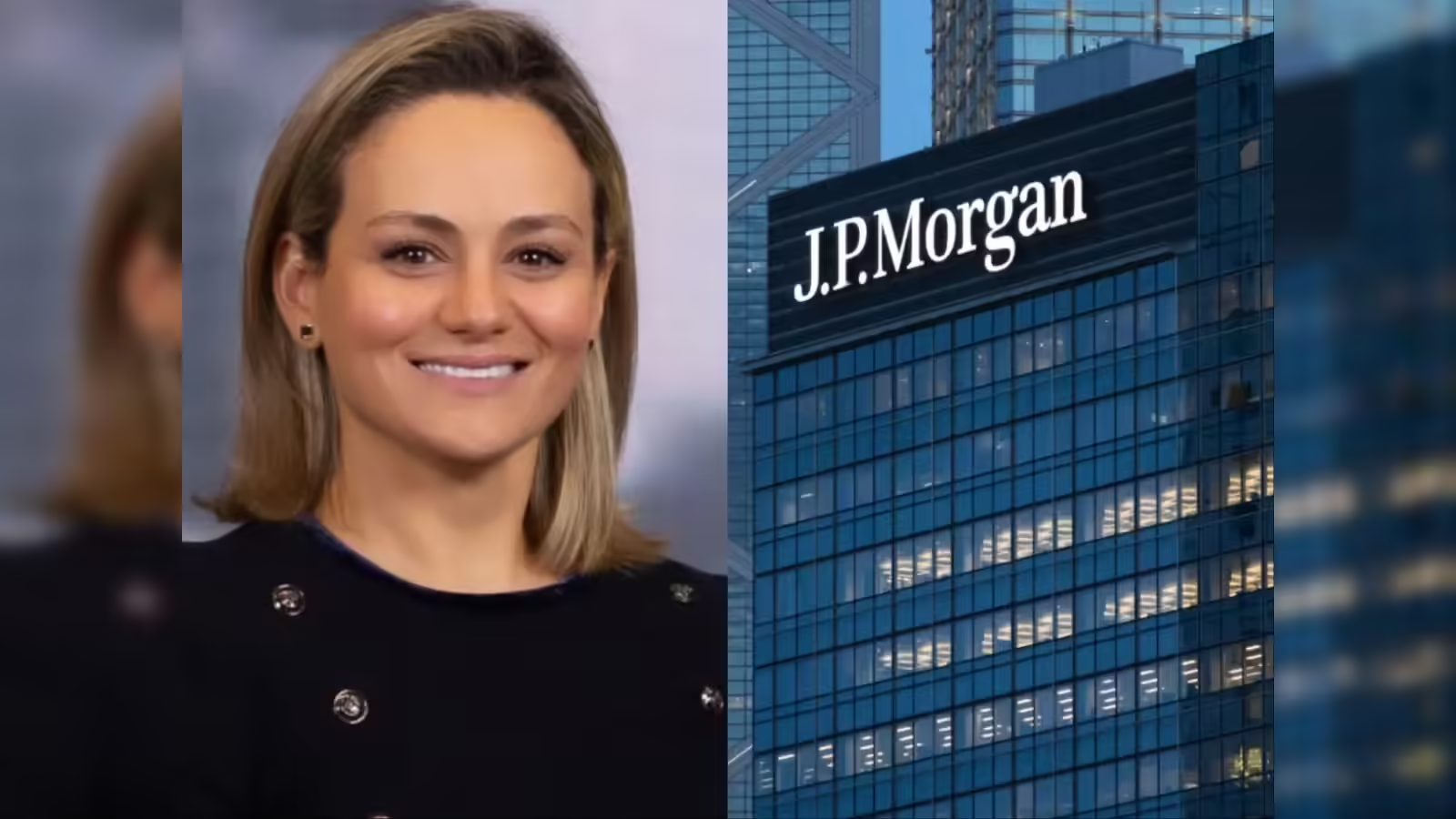
A lawsuit filed against JPMorgan Chase has thrust the bank into fresh scrutiny over workplace culture, power, and harassment. An employee at the Wall Street giant claims that Lorna Hajdini, an executive director in the firm’s leveraging finance division, sexually assaulted and racially harassed him over a period of about six months, ultimately coercing him into unwanted sexual acts while dangling his career and year‑end promotion in front of him. The allegations, laid out in a complaint filed under the anonymous name John Doe, paint a disturbing picture of a workplace where power was allegedly weaponized along lines of race, gender, and seniority.
The case is now drawing attention not only for the severity of the accusations, but also for how the bank has responded. JPMorgan has said it conducted a “thorough investigation” and found no basis for the claims, insisting that the allegations lack merit. Yet many observers are asking a broader question: how could a senior executive allegedly operate with such impunity, and what does this say about the way big financial institutions handle reports of serious misconduct?
The Allegations: A Pattern of Coercion and Threats
According to the lawsuit, the harassment began in spring 2024 and intensified over the next several months, with the first reported incident occurring in early May. The plaintiff, identified as an Arab and South Asian junior employee, describes an immediate escalation of sexually charged behavior from Hajdini. The complaint alleges that she inappropriately touched him at his desk and made crude comments, including a remark after learning he had played college basketball: “Oh, you did play basketball in college? … I love basketball players… they get me so wet.”
From there, the abuse allegedly shifted from sexual comments to outright threats. The plaintiff claims Hajdini made it clear that his career at JPMorgan was at risk unless he submitted to her sexual demands. When he resisted, she became more explicit, telling him, “If you don’t fk me soon, I’m going to ruin you… never forget, I fking own you.” Over the summer, the complaint says she linked his pending year‑end promotion with sexual compliance, telling him, “You’re gonna need to earn it, my little Arab boy toy.”
The language used in these alleged quotes is dehumanizing, voyeuristic, and layered with racial humiliation. The plaintiff alleges that Hajdini repeatedly reduced him to narratives of race and fetish, referring to him as “my little brown boy” and framing sexual acts as a requirement for advancement. The lawsuit suggests that he ultimately participated in these acts out of fear of retaliation, reputational damage, and the crushing pressure of losing a coveted position at one of the world’s most powerful banks.
Racial and Sexual Harassment in the Workplace
What makes this case especially troubling is the combination of sexual misconduct and racial harassment. The plaintiff is identified as both Arab and South Asian, and the complaint alleges that Hajdini used racialized language, including the phrase “my little Arab boy toy,” to demean and control him. This kind of racialized sexual harassment is not just offensive; it can be legally classified as a form of hostile work environment when it affects the way someone is treated on the job.
The allegation that Hajdini tied his promotion and career prospects to sexual compliance also fits a familiar pattern in workplace‑abuse narratives: a senior figure weaponizing job security against a junior employee. When someone in power signals that their behavior can make or break a person’s professional future, the pressure to comply—even against one’s will—can feel overwhelming. The plaintiff’s decision to stay silent at first, and reportedly not to participate in JPMorgan’s internal investigation, may reflect this fear, as well as the shame and confusion that often accompany such experiences.
JPMorgan’s Response and the Limits of Internal Investigations
In its public statement, JPMorgan says that after a “thorough investigation,” the bank found no basis for the allegations. A spokesman stated, “Following an investigation, we don’t believe there’s any merit to these claims.” The bank also noted that all other employees were cooperative, while the plaintiff did not participate in the internal probe.
That explanation, however, raises questions. If the victim was afraid to speak up or did not trust the process, an internal investigation conducted without their input can easily produce a “no‑merit” finding—even if serious misconduct has occurred. The absence of participation does not equal the absence of wrongdoing; it may instead signal deep mistrust in the institution’s ability to protect and support employees who come forward.
Corporate employers often tout their commitment to diversity, inclusion, and zero tolerance for harassment, yet cases like this show how hard it is to translate policies into practice. When an executive is accused of using racial slurs, making sexual threats, and leveraging promotion decisions as a bargaining chip, the issue is not just about one person’s behavior but about the broader structures that allow such behavior to persist.
What This Means for Workplace Culture
The lawsuit against Lorna Hajdini is more than a legal dispute; it is a cautionary tale about the dynamics of power and vulnerability in large institutions. It highlights how easily lines can be crossed when supervisors hold significant sway over hiring, promotions, and reputation. It also underscores the importance of safe, independent reporting channels and the need for companies to design investigations that do not rely solely on the participation of traumatized employees.
For the junior employee who brought the case, the road ahead is likely to be painful and uncertain. For JPMorgan, the fallout is reputational, cultural, and financial. The bank will need to decide whether this incident prompts a deeper review of how it trains managers, investigates harassment complaints, and supports employees from historically marginalized backgrounds.
In the meantime, the allegations stand as a stark reminder that harassment can take many forms—sexual, racial, and career‑based—and that closing the gap between corporate policy and real‑world protection is one of the hardest challenges modern workplaces still face.
News which you won’t want to miss
- B&M and Home Bargains Chocolate Recall: Urgent Allergy Warning Over Missing Ingredient Labels
- Council Tax Reforms 2027: New Rules Give Vulnerable Households More Time and Protection
- Jimmy Kimmel vs Trump: Controversy Over Joke Sparks Debate on Free Speech and Responsibility
- Allbirds AI Pivot Explained: Why the Struggling Sneaker Brand Is Betting Big on Artificial Intelligence
- EasyJet Refund Controversy: Family’s £4,000 Dispute Sparks Debate Over Airline Compassion Policies