 By Admin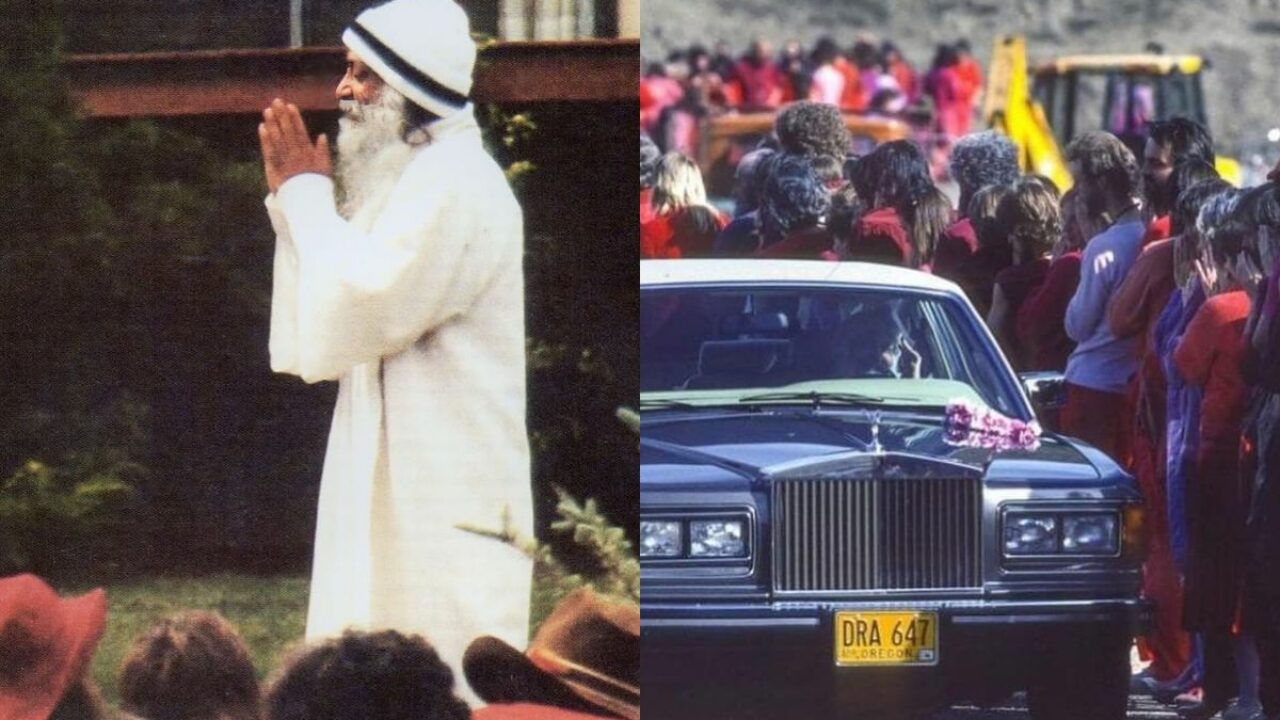
Why Osho Owned 93 Rolls-Royces: The Untold Story Behind the World’s Most Controversial Guru
When people think of spiritual leaders, they usually imagine simplicity, silence, humility, and detachment from material wealth.
But Osho Rajneesh shattered that image in one of the most unforgettable ways in modern spiritual history.
In the 1980s, while living at his controversial commune in Oregon, United States, Osho became globally famous not just for his teachings — but for owning an astonishing fleet of 93 Rolls-Royce cars. The image of a spiritual master surrounded by some of the world’s most luxurious automobiles shocked the public, fascinated the media, and sparked a debate that still continues decades later. Contemporary and historical accounts note that Rajneesh’s Oregon commune became known for its scale, wealth, and his ownership of more than 90 Rolls-Royces model name.
This extravagant collection earned him a nickname the world would never forget:
“The Rolls-Royce Guru.”
But the real story behind those 93 luxury cars is far more complex than simple excess.
Were they a symbol of ego?
A marketing masterstroke?
A philosophical statement?
Or a deliberate social experiment?
The answer lies somewhere in between all of them.
Who Was Osho Rajneesh?
Before understanding the cars, it’s important to understand the man behind them.
Osho, born Chandra Mohan Jain, was an Indian spiritual teacher, philosopher, and mystic who rose to prominence in the 1970s and 1980s. Known earlier as Bhagwan Shree Rajneesh, he attracted thousands of followers from India, Europe, and the United States with teachings that blended meditation, personal freedom, emotional release, and rebellion against traditional social conditioning. Britannica notes that Rajneesh reinterpreted spirituality as living fully in the world without attachment, rather than strict asceticism.
Unlike many traditional gurus, Osho didn’t preach renunciation in the conventional sense. He challenged organized religion, criticized social hypocrisy, and often spoke in provocative ways about love, money, freedom, sexuality, and consciousness.
And perhaps most importantly:
He understood attention.
Long before the age of viral branding, Osho knew how to create symbolism that the world could not ignore.
The Rolls-Royces were not random.
They were part of a larger image — one that forced people to ask uncomfortable questions about spirituality, desire, and wealth.
How Osho Ended Up in America
In 1981, Osho moved from Pune, India, to the United States, where his followers purchased a massive ranch property in Oregon and built a commune known as Rajneeshpuram. The site became the center of his movement in America and one of the most unusual spiritual experiments ever attempted on U.S. soil. Britannica describes Rajneeshpuram as a large, highly organized community that attracted thousands of followers and generated major public controversy.
The commune was unlike anything the world had seen.
It was not just an ashram or meditation retreat.
It was a self-contained spiritual city with:
- roads
- farms
- airstrips
- public services
- businesses
- and thousands of residents
To some, it looked like a futuristic utopia.
To others, it looked like a dangerous cult wrapped in luxury and charisma.
And at the center of it all sat Osho — dressed in flowing robes, speaking less, and becoming more mysterious by the day.
That mystery only grew stronger when the cars started arriving.
The Famous 93 Rolls-Royces
At the height of Rajneeshpuram, Osho became associated with a jaw-dropping collection of 93 Rolls-Royce cars, one of the largest private Rolls-Royce fleets ever linked to a single individual. Historical reporting from the 1980s and later reference works consistently describe his collection as 93 Rolls-Royces or more than 90 and more.
Just imagine that for a moment.
Not one luxury car.
Not two.
Not even ten.
Ninety-three Rolls-Royces.
That number alone was enough to make headlines around the world.
In an era before social media, this was the kind of visual excess that television cameras loved. Newspapers, journalists, critics, and curious outsiders became obsessed with the spectacle.
A spiritual teacher with almost a hundred Rolls-Royces?
It sounded too outrageous to be real.
And that is exactly why it worked.
Did Osho Actually Buy the Cars Himself?
One of the most misunderstood parts of this story is the assumption that Osho personally went out and purchased all 93 cars for himself.
That is not how the story is generally told.
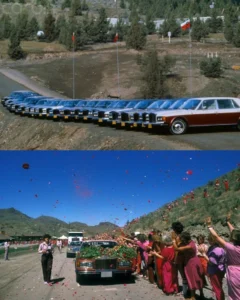
Most of the Rolls-Royces were gifted by his wealthy followers.
His devotees, many of whom were affluent businesspeople, professionals, and international disciples, contributed heavily to the movement’s wealth and image. Historical coverage of Rajneeshpuram repeatedly described followers “showering” him with luxury gifts, including jewels and Rolls-Royces.
For his followers, these cars were not just automobiles.
They were offerings.
Symbols of devotion.
Extensions of reverence.
To outsiders, that looked absurd.
To insiders, it often looked sacred.
And that contrast is exactly what made the Rolls-Royce collection such a powerful cultural symbol.
Why Did Osho Keep So Many Rolls-Royces?
This is the question that has fascinated people for decades.
Because even if the cars were gifts, the obvious question remains:
Why keep them?
Why not donate them?
Why not sell them?
Why not reject them entirely if spirituality is supposed to be beyond materialism?
Osho’s answer — at least philosophically — was both provocative and strategic.
He often suggested that the cars were not about greed, but about challenging society’s hypocrisy around wealth. He rejected the traditional spiritual idea that holiness must look poor. Britannica notes that Rajneesh openly praised capitalism and consumption and argued against the romanticization of poverty.
In essence, Osho’s message was:
Why should a spiritual man have to look poor to be considered enlightened?
That question alone was enough to disturb millions of people.
Because society often accepts wealth in celebrities, politicians, industrialists, and athletes — but feels deeply uncomfortable when a guru displays it openly.
Osho understood that contradiction.
And he used it brilliantly.
The Daily “Drive-By Darshan” Ritual
One of the most iconic parts of the entire Rolls-Royce story was Osho’s daily appearance in one of the cars.
At Rajneeshpuram, he would often emerge for what became known as a “drive-by darshan.” Historical reporting describes followers lining the road as Rajneesh passed in a Rolls-Royce, often in silence, while they sang, danced, cried, and greeted him.
He would not always give long speeches.
Sometimes, simply being seen was the event.
And that visual was unforgettable:
- a silent guru
- gliding through a desert commune
- in a polished Rolls-Royce
- while thousands watched in devotion
It was theatrical.
Mystical.
Luxurious.
And impossible to ignore.
In modern terms, it was spiritual branding at genius level.
Osho may not have been using Instagram or YouTube — but he understood image, repetition, ritual, and media fascination better than most public figures of his time.
Was It a Joke, a Philosophy, or a Performance?
Many people believed Osho’s Rolls-Royce collection was a contradiction.
But for his followers and defenders, it was a statement.
Osho reportedly framed much of the spectacle as a mirror to society — almost like a philosophical prank exposing people’s obsession with symbols of status.
That’s what made his image so powerful:
he didn’t hide wealth.
He exaggerated it.
And by exaggerating it, he forced people to react.
Some saw enlightenment with confidence.
Some saw hypocrisy with robes.
Some saw manipulation.
Some saw freedom.
That’s the genius of symbolic controversy:
It makes everyone reveal themselves.
People didn’t just react to Osho’s cars.
They reacted to what the cars meant to them.
And in that sense, the 93 Rolls-Royces became less about automobiles and more about psychology.
Why America Was So Fascinated by Osho
The United States in the 1980s was the perfect stage for a figure like Osho.
It was a time of:
- consumerism
- media spectacle
- spiritual experimentation
- celebrity culture
- and cultural rebellion
Into that environment walked an Indian mystic with:
- thousands of disciples
- a desert commune
- global controversy
- and a fleet of luxury cars
Of course America was fascinated.
Osho was almost impossible to categorize.
He was too spiritual to be just a celebrity.
Too rich-looking to fit the saint image.
Too philosophical to dismiss as just a showman.
Too controversial to ignore.
And that ambiguity made him magnetic.
The media didn’t know whether to mock him, fear him, study him, or sensationalize him.
So it did all four.
And the Rolls-Royces became the perfect visual shorthand for the entire Osho phenomenon.
The Criticism Never Stopped
Of course, not everyone saw symbolism in the spectacle.
Critics saw something very different.
To them, the Rolls-Royce collection represented:
- hypocrisy
- manipulation
- excess
- ego
- and a cult of personality
And to be fair, Osho’s Oregon years were not remembered only for luxury and fascination. Rajneeshpuram also became infamous for legal battles, political conflict, criminal investigations, and the broader collapse of the commune. Britannica documents that the movement in Oregon became tied to multiple controversies and crimes involving senior members, including the 1984 salmonella attack and later legal consequences.
So for many people, the cars did not look like philosophy.
They looked like warning signs.
That is why Osho remains such a polarizing figure even today.
His legacy is impossible to separate from both:
- his spiritual influence
and - the controversy that followed him
And the Rolls-Royces sit exactly at the center of that contradiction.
What the 93 Rolls-Royces Really Symbolized
If we strip away the headlines and the shock value, Osho’s Rolls-Royce collection symbolized something much bigger than luxury.
It symbolized a direct challenge to old assumptions about spirituality.
For centuries, society has often linked spiritual depth with:
- poverty
- sacrifice
- austerity
- visible simplicity
Osho challenged that script completely.
His message, whether one agrees with it or not, was radical:
A person can be surrounded by wealth and still claim inner freedom.
That idea was deeply offensive to some people.
And deeply liberating to others.
Because if spirituality is truly internal, then why should external appearance define it?
That was Osho’s philosophical battlefield.
And the 93 Rolls-Royces were his most dramatic weapon.
Why the Story Still Fascinates People Today
Even decades later, people are still captivated by this story.
Why?
Because it sits at the intersection of everything that attracts human curiosity:
- spirituality
- luxury
- rebellion
- psychology
- media spectacle
- power
- mystery
- and contradiction
The Osho Rolls-Royce story is not just “weird history.”
It’s a lesson in:
- image-building
- symbolism
- public fascination
- and how one man turned controversy into immortality
Even today, when people hear “Osho,” one of the first images that comes to mind is not always a meditation discourse.
News which you won’t want to miss
-
The Rise of AI Agents: Why 2026 Is the Year of Digital Employees
- What Is Multimodal AI? The Technology Redefining Artificial Intelligence in 2026