 By Admin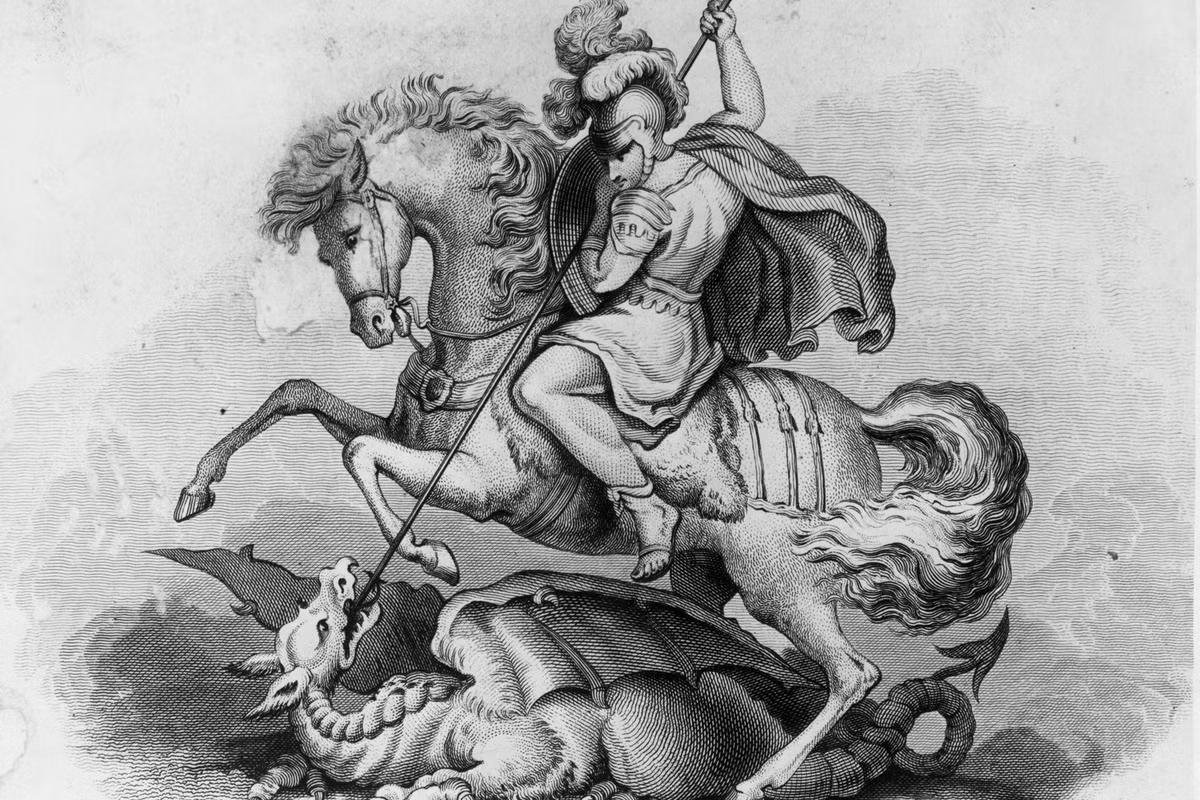
St George’s Day: The Man, The Myth, and the Meaning Behind England’s Patron Saint
Every year on April 23, England marks St George’s Day with flags, cultural pride, and a sense of national identity. The iconic red cross on a white background appears across towns and cities, symbolizing a figure whose story blends history, faith, and legend.
But beyond the popular image of a knight slaying a dragon lies a far more complex and fascinating story.
Who Was St George?
Saint George is believed to have been a Roman soldier born around 280 AD in what is now modern-day Turkey. He came from a wealthy Christian family at a time when Christianity was still a minority faith within the Roman Empire.
As he grew older, George joined the Roman army and served under Emperor Diocletian. His life took a dramatic turn in 303 AD, when Diocletian launched a crackdown on Christians, ordering soldiers to renounce their faith and perform traditional pagan rituals.
George refused. Not only did he reject the order, but he openly declared his Christian beliefs. Despite attempts to persuade him with promises of wealth and status, he stood firm. His defiance ultimately led to his execution on April 23, 303 AD.
This act of courage and conviction is what earned him recognition as a martyr in Christian tradition.
The Dragon-Slaying Legend: Myth or Message?
The image most people associate with St George is that of a heroic knight defeating a dragon. However, this part of the story is not historical fact but a legend that emerged centuries later.
The tale gained popularity through medieval stories spread by the Eastern Orthodox Church and later brought to Europe during the Crusades. According to the legend, a dragon terrorized a town in Libya, demanding daily sacrifices to spare the people.
When the town ran out of livestock, children were chosen by lottery. One day, the king’s daughter was selected. As she faced her fate, St George appeared, fought the dragon, and defeated it. In return, the townspeople converted to Christianity.
While dramatic, this story is widely interpreted as symbolic. The dragon often represents evil or chaos, while George’s victory symbolizes faith, courage, and the triumph of good over adversity.

Why Is St George England’s Patron Saint?
It may seem surprising that a figure born in modern-day Turkey became England’s patron saint. The connection dates back to the 14th century when King Edward III officially adopted St George as the nation’s patron saint in 1327.
At the time, England was seeking a powerful symbol to represent its values and identity. St George, with his story of bravery, loyalty, and faith, perfectly embodied the qualities the kingdom wanted to project.
Historically, patron saints were not chosen based on birthplace but on what they represented. In George’s case, his story resonated deeply with the ideals of medieval England.
A Global Figure Beyond England
St George’s influence extends far beyond England. He is also recognized as a patron saint in several other regions, including Portugal, Malta, Ethiopia, Georgia, and parts of the Middle East.
This widespread recognition highlights how his story transcends borders, cultures, and traditions. His legacy has been adapted and celebrated in different ways across the world, making him one of the most universally recognized saints in Christianity.

The Meaning of St George’s Day Today
In modern times, St George’s Day is celebrated with a mix of tradition and reflection. While it may not be a public holiday in England, it remains an important cultural occasion.
People mark the day by displaying the St George’s Cross, attending church services, and participating in local events. For many, it’s also an opportunity to reflect on national identity and shared values.
The day is less about historical accuracy and more about what St George represents: courage in the face of adversity, standing by one’s beliefs, and the enduring power of storytelling.
News which you won’t want to miss
- B&M and Home Bargains Chocolate Recall: Urgent Allergy Warning Over Missing Ingredient Labels
- Council Tax Reforms 2027: New Rules Give Vulnerable Households More Time and Protection
- American YouTuber Jailed in South Korea: Johnny Somali Sentenced Over Controversial Actions
- Allbirds AI Pivot Explained: Why the Struggling Sneaker Brand Is Betting Big on Artificial Intelligence
- Ice Spice McDonald’s Altercation: Rapper Breaks Silence After Alleged Attack in Los Angeles