 By Admin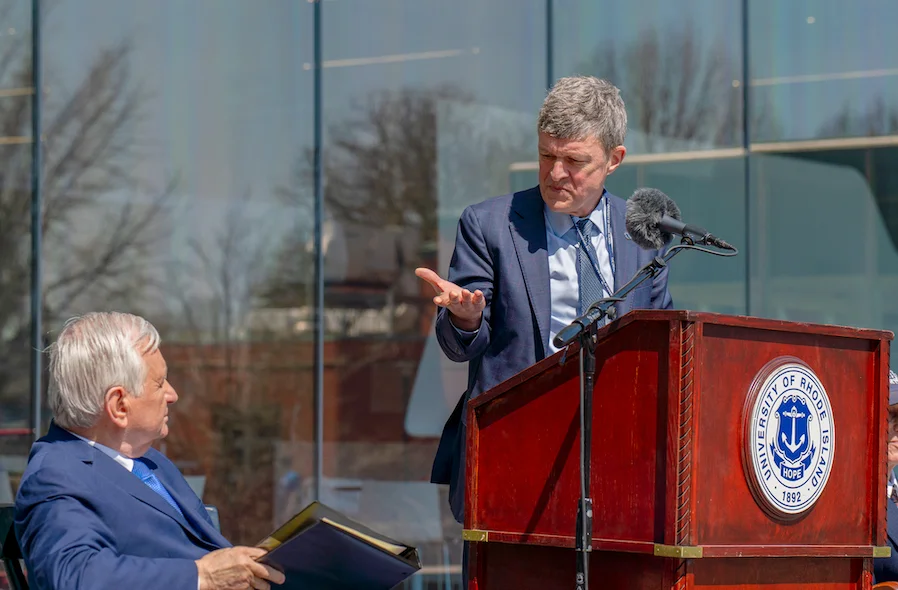
On April 10, the University of Rhode Island hosted its fifth annual World Quantum Day 2026 event, bringing together policymakers, scientists, and technology leaders to examine a question that is becoming increasingly relevant: how does quantum computing influence not just science, but society as a whole?
The event, held on the Kingston Campus, was part of the global World Quantum Day 2026 initiative, which aims to make quantum science more accessible while highlighting its rapidly growing role in innovation, research, and industry. What set this year’s gathering apart was its focus on the intersection of quantum physics with the humanities—a conversation that signals a shift in how emerging technologies are being understood.

A Broader Conversation Around Quantum Technology
Traditionally viewed as a highly technical field, quantum computing is now being discussed in a much wider context. Speakers at the event explored topics ranging from ethics and governance to art and philosophy. The central theme was clear: quantum technology is no longer confined to laboratories; it is beginning to influence how we think, create, and interact with the world.
Discussions included whether guardrails are necessary for quantum systems, how quantum computing might reshape creative expression, and even deeper philosophical questions about the nature of reality itself. These conversations reflect a growing recognition that technological progress must be examined alongside its societal implications.
Key Voices Driving the Dialogue
The event featured a diverse lineup of speakers from government, academia, and industry. Among them was Victoria Gu, who chairs the Senate Committee on Artificial Intelligence and Emerging Technologies. Industry perspectives were represented by experts such as Ishann Pakrasi from Amazon Web Services and Charles Robinson of IBM.
The keynote address was delivered by Suhail Zubairy, a leading figure in quantum optics, who emphasized the transformative potential of quantum research. His insights highlighted how breakthroughs in quantum science could redefine computing, security, and communication in the coming decades.
Government Support and Future Infrastructure
The event also underscored strong government backing for quantum research. Jack Reed toured the future Quantum Computing and Technology laboratory at URI’s Fascitelli Center for Advanced Engineering, a facility expected to open in 2028.
This upcoming lab will feature advanced capabilities, including low-temperature environments essential for quantum systems, specialized clean rooms, and secure areas for handling sensitive data. According to Reed, investments like these are critical for maintaining competitiveness in both economic and national security domains.
Such initiatives reflect a broader strategy: building partnerships between government, industry, and academia to accelerate innovation in quantum technologies.

Launch of a New Mini-Grant Program
One of the most impactful announcements at the event was the introduction of a new mini-grant program aimed at students. Supported by Amazon Web Services and URI’s Institute for AI and Computational Research, the program seeks to encourage interdisciplinary exploration.
Undergraduate students will receive funding to explore how quantum computing intersects with fields like art, social sciences, and humanities, while graduate students will focus on the broader societal impact of quantum technologies.
This initiative is particularly significant because it opens the door for non-STEM students to engage with quantum research, signaling a shift toward more inclusive and interdisciplinary innovation.
Why the Humanities Matter in Quantum Research
As quantum computing advances, its implications extend far beyond technical performance. Issues such as data security, ethical use, and societal disruption are becoming central to the conversation.
The integration of humanities into quantum research allows for a more balanced approach—one that considers human values alongside technological capabilities. It ensures that innovation does not outpace the frameworks needed to manage its consequences.
By encouraging collaboration across disciplines, institutions like the University of Rhode Island are helping to shape a future where technology serves society in meaningful and responsible ways.
A Glimpse Into the Future
World Quantum Day 2026 at URI highlighted a critical turning point. Quantum computing is no longer a distant concept; it is an emerging force that will influence industries, governments, and everyday life.
What made this event stand out was not just the science, but the recognition that understanding quantum technology requires more than equations and algorithms. It requires insights from philosophy, ethics, and the arts.
As the world moves deeper into the quantum era, conversations like these will play a vital role in ensuring that technological progress remains aligned with human values.
News which you won’t want to miss
- Why Osho Collected 93 Rolls-Royces and Shocked the Entire World
- Iran Ceasefire Explained: How Trump’s War Threats Turned Into a Fragile Two-Week Truce