 By Admin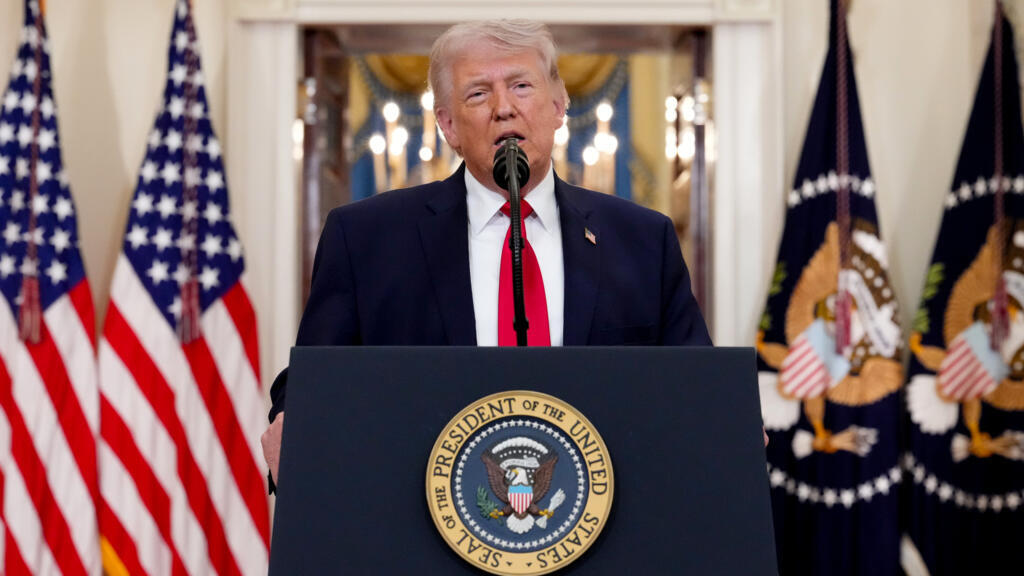
US Airman dramatic rescue deep inside Iran has added a new and dangerous chapter to the already explosive conflict unfolding across the Middle East.
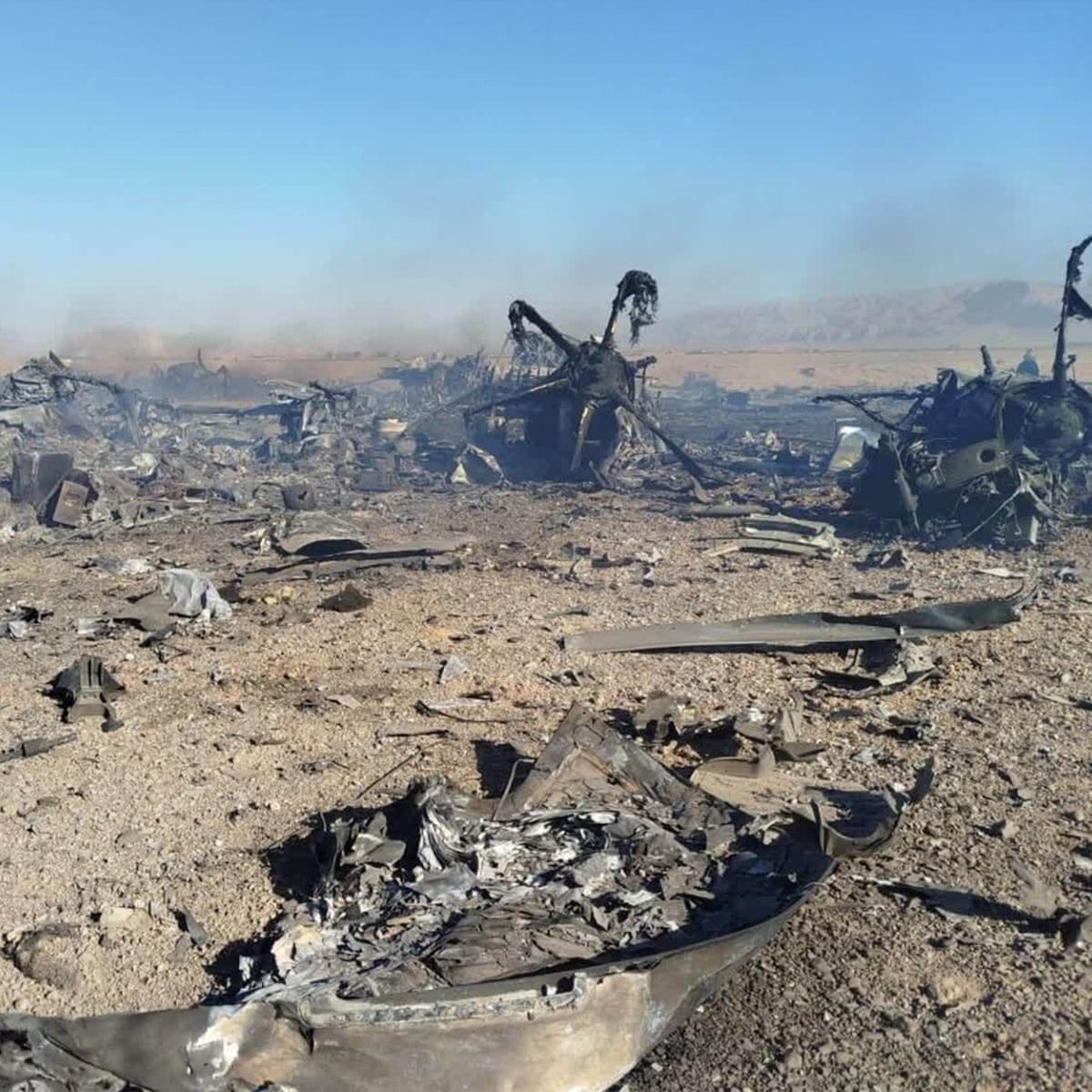
A U.S. service member whose F-15 fighter jet was shot down over Iran has now been rescued after spending more than a day alone behind enemy lines, according to reports and officials. The airman reportedly avoided capture while hiding in rough mountainous terrain, surviving with only limited gear and waiting for a recovery mission to reach him. Reuters reported the airman was a weapons-systems officer, wounded, and recovered in a high-risk operation involving heavy support.
The rescue has instantly become one of the most talked-about military operations of the conflict so far — not just because of the danger involved, but because it happened as tensions between Washington and Tehran continue to spiral.
At the same time, President Donald Trump has escalated his rhetoric again, warning Iran that it could face even more severe military action if it refuses to reopen the Strait of Hormuz or move toward a deal. Reuters reported Trump said the U.S. could reopen the strait “with a little more time,” while U.S. intelligence assessments suggest Iran is unlikely to back down soon.
Taken together, the rescue and the renewed threats show just how quickly this crisis is intensifying.
How the Downed US Airman Survived in Iran
What makes this story especially gripping is what reportedly happened after the aircraft went down.
According to officials cited in coverage, the airman survived the crash and then spent over 24 hours evading capture in hostile territory. He was reportedly equipped with:
- a pistol
- a communications device
- and a tracking beacon
Those few tools may have made the difference between rescue and capture.
Reports say the airman hid alone in a mountain crevice and moved through difficult, rugged terrain while U.S. forces and intelligence teams worked urgently to locate and recover him. Reuters described the terrain as high mountains and said the mission was supported by a large rescue package.
In a conflict where the risk of capture can become a geopolitical flashpoint overnight, that survival window was critical.
And it is exactly what made the rescue mission so urgent.
US rescues crew member downed in Iran
Trump hails US military for pulling off ‘most daring’ operations@ShivanChanana has more pic.twitter.com/oZYUFg4qQE
— WION (@WIONews) April 5, 2026
Inside the Daring Rescue Mission
The operation to recover the downed service member appears to have been massive in scale.
According to reports, U.S. commandos were sent into Iran’s mountainous terrain after military aircraft reportedly carried out bombing runs to help secure or clear the area. The mission is said to have involved:
- hundreds of military personnel
- intelligence operatives
- air support
- surveillance coordination
- and even a CIA deception effort designed to mislead potential captors about where the rescue was taking place
Reuters reported the operation involved dozens of military assets, and that two U.S. Black Hawk helicopters were hit by gunfire during the mission, though no American fatalities were reported in the recovery itself.
That level of coordination shows how seriously Washington viewed the possibility of losing an American service member inside Iranian territory.
This was not just a rescue mission.
It was a race against time, geography, and escalation.
Trump Turns Rescue Into a Warning to Iran
Shortly after news of the rescue emerged, Trump publicly celebrated the operation and used the moment to reinforce a much broader message to Iran.
He said the airman was “seriously wounded” but receiving care, and he signaled that the mission would become part of his broader argument for continuing pressure on Tehran.
But the White House response didn’t stop at praise.
Trump also issued a harsh public warning, saying Iran would face further military consequences if it failed to make a deal or reopen the Strait of Hormuz, one of the most strategically important waterways in the world.
That matters because the rescue is not unfolding in isolation. It is happening in the middle of a much larger regional crisis — one involving:
- airstrikes
- energy disruptions
- threats to shipping lanes
- and retaliatory attacks across the Gulf
And Trump appears determined to link all of it together under a strategy of maximum pressure.

Why the Strait of Hormuz Is at the Center of This Crisis
If there is one place that now sits at the heart of the conflict, it is the Strait of Hormuz.
This narrow waterway is one of the world’s most critical oil transit routes, and any disruption there sends immediate shockwaves through global energy markets.
That is exactly what has been happening.
Iran’s moves around the strait have already rattled markets, and Reuters reported that U.S. crude jumped more than 11% and Brent rose nearly 8% after Trump vowed more attacks earlier in the conflict.
For Washington, reopening Hormuz is now about more than military prestige — it is about:
- global oil flows
- inflation pressure
- shipping security
- and economic stability
For Tehran, however, the strait is leverage.
And that is what makes this so dangerous.
According to Reuters, U.S. intelligence believes Iran sees its ability to disrupt Hormuz as strategically valuable and is unlikely to ease its hold soon.
That means the rescue of one airman may become just one dramatic moment inside a much bigger and longer confrontation.
Iran’s Response Is Making the Region Even More Unstable
As Trump increases pressure, Iran is signaling that it is not stepping back.
Iranian state media and officials have issued fresh threats and claimed responsibility for attacks tied to American-linked or regional energy infrastructure, including facilities in Bahrain, Kuwait, and the United Arab Emirates, though some of those battlefield claims remain difficult to independently verify in real time.
Reuters separately reported Iran claimed it hit an Israel-affiliated vessel in the Strait of Hormuz, setting it on fire, and also reported Iranian claims that several “enemy aircraft” were destroyed during the U.S. rescue mission — claims that were not independently verified.
This is exactly how regional wars become harder to contain:
- more fronts
- more retaliatory claims
- more pressure on shipping
- and more uncertainty for governments trying to avoid direct spillover
And when energy infrastructure enters the equation, every military move suddenly carries a global economic price tag.
The Gulf Is Now on Edge
One of the clearest signs of how far this conflict is spreading is that neighboring Gulf states are no longer just watching from the sidelines.
They are increasingly being pulled into the consequences.
Reports indicate that falling debris from air defense interceptions over a petrochemical facility in Abu Dhabi caused three fires, though no injuries were reported.
Even when attacks don’t directly hit their intended targets, the fallout can still cause serious damage and fear across the region.
That means countries that may not want to be directly involved in the conflict are now being forced to deal with:
- airspace threats
- infrastructure risk
- maritime disruption
- and economic uncertainty
This is no longer just a U.S.-Iran issue.
It is becoming a broader Gulf security crisis.
Israel Is Publicly Celebrating the Rescue — and Sending a Message
The rescue operation has also become politically useful for Israel, which has strongly aligned itself with Washington’s posture during the conflict.
Israeli Prime Minister Benjamin Netanyahu praised the mission, calling it an “incredible rescue,” while other Israeli officials pointed to it as evidence of the close military cooperation between the U.S. and Israel.
That praise matters because it reinforces the image of a joint front against Iran — militarily, politically, and symbolically.
At the same time, it likely deepens Tehran’s belief that it is confronting not just the U.S., but a broader regional coalition determined to weaken it.
That is the kind of perception that often makes de-escalation harder, not easier.
Diplomatic Efforts Are Still Happening — But They Look Fragile
Despite the military escalation, there are still visible attempts to prevent the situation from getting even worse.
According to updates from the region:
- Egypt’s foreign minister has been in contact with U.S. and Iranian officials
- Oman has reportedly been discussing possible ways to allow ships to pass through the Strait of Hormuz
- regional governments are still trying to create off-ramps before the conflict expands further
Those talks matter because once Hormuz becomes fully locked down or regional infrastructure becomes a regular target, the chances of broader confrontation rise sharply.
Still, diplomacy right now looks fragile.
The rescue mission may be a tactical success for the U.S., but it also comes at a moment when every side seems to be preparing for the possibility that the conflict gets worse before it gets better.
Iran’s Internet Blackout Is Raising Even More Questions
Another alarming development is the growing information blackout inside Iran.
Monitoring group NetBlocks has said the country’s internet disruption has now become the longest nationwide internet shutdown on record, a sign of just how tightly information is being controlled during the crisis. CNN also cited the shutdown as a major communications blackout inside Iran.
That matters for several reasons.
It limits:
- independent reporting
- civilian communication
- verification of battlefield claims
- and the ability of the outside world to fully understand what is happening on the ground
In a conflict already filled with propaganda, counterclaims, and high-stakes narratives, an information blackout only makes the truth harder to pin down.
And when truth becomes harder to verify, escalation often becomes easier.
Why This Rescue Matters Beyond One Airman
The rescue of the U.S. airman is already being framed as a military success story — and in operational terms, it clearly was a major achievement.
But its significance goes far beyond one individual recovery.
This mission matters because it symbolizes:
- how exposed U.S. personnel now are in the conflict
- how far the war has expanded
- how difficult rescue and extraction operations have become
- and how quickly a single battlefield event can become a strategic crisis
If the airman had been captured, the political and military consequences could have been enormous.
Instead, the U.S. pulled off a dramatic rescue.
But that success does not remove the deeper reality:
The region is still moving toward a more dangerous phase.
And if Hormuz remains contested, if energy facilities continue to be targeted, and if both sides keep escalating publicly, then this rescue may end up being remembered not as the climax of the crisis — but as one of the warning signs before something even bigger.
News which you won’t want to miss
-
The Rise of AI Agents: Why 2026 Is the Year of Digital Employees
- What Is Multimodal AI? The Technology Redefining Artificial Intelligence in 2026